

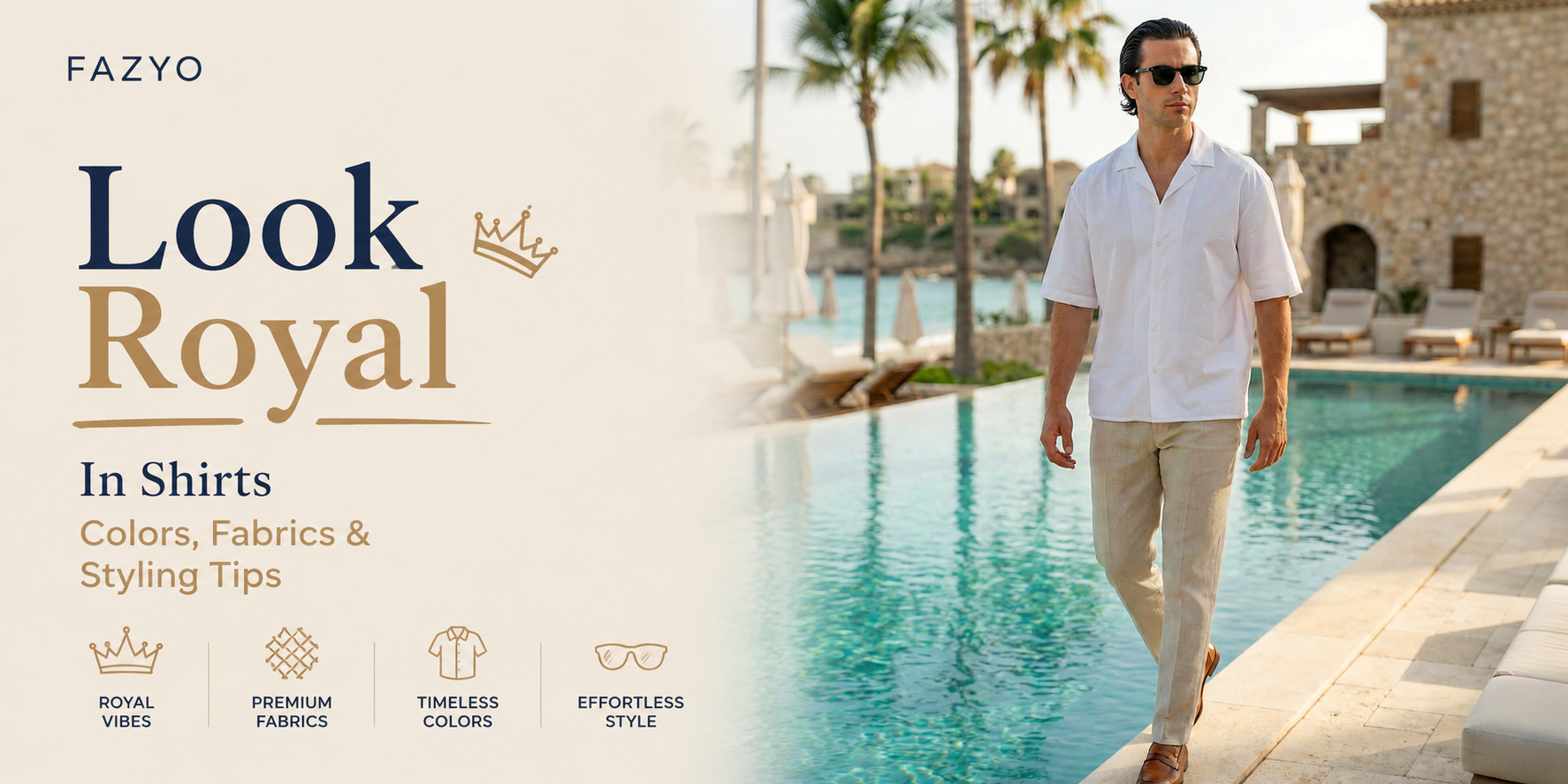
How to Look Royal in Shirts: Colors, Fabrics & Styling Tips
There are shirts you wear. And then there are shirts that make people look twice when you walk into a room. The difference isn't always price. It's not even the brand. It's color, fabric, and the way you've put it together — three decisions most men make without thinking, and then wonder why their outfit never quite lands the way they wanted it to.
Getting that regal edge in shirts for men is genuinely simpler than it sounds. You don't need a full wardrobe overhaul. You need to understand a few fundamentals and apply them with intent.
Most men pick up whatever's on top of the pile. The ones who always look put-together do the opposite — they start with the question: what does this occasion actually call for, and what am I trying to communicate? Once you're asking that, half the work is done.
The Colors That Actually Make You Look Like You Mean Business
Royal blues. Deep olives. Burgundies. Slate greys. These aren't just colors — they're signals. They read as deliberate. They photograph well under Indian afternoon light, hold their depth under fluorescent office lighting, and don't wash out in the evening when the outdoor bulbs come on at a wedding lawn.
Pastels work, but context is everything. A powder blue shirt in a 3pm meeting hits differently than the same shirt at a 7pm dinner. The men who look most put-together aren't necessarily wearing dramatic colors — they're wearing the right color for the right time. Navy on navy is never a mistake. Deep green with off-white trousers is almost impossible to get wrong.
Stay away from shades that fight your skin tone. Neon yellows and oranges read casual-to-the-point-of-sloppy unless you've built the outfit very carefully around them. For the Indian complexion — warm undertones, ranging from wheatish to deep brown — jewel tones and earth tones never disappoint.
That's the honest answer. You don't need more colors. You need fewer, better choices.
The Fabric Question Nobody Talks About Enough
Cotton is honest. It breathes, it ages decently, and it tells you whether your shirt actually fits because there's nowhere for a cheap cut to hide. Linen has a looseness to it that reads casual unless the shirt is slim and the occasion is relaxed — then it becomes exactly right. Rayon drapes well but can look cheap in the wrong light.
For the heat most Indian cities carry between March and October, cotton wins every time. A 100% cotton shirt for men in a solid color will outlast, outperform, and outstyle a synthetics-blend shirt on almost every occasion you'll actually wear it to.
Fabric weight matters too. A thicker cotton has structure. It holds a collar, keeps shape after washing, and photographs with dimension. Thin cotton goes limp by noon. If your shirt looks great on the hanger but deflated by 2pm, the fabric weight is usually the culprit.
Don't overthink it. Heavy enough to hold shape. Natural enough to breathe.
Collar and Fit: The Two Things That Separate Royal from Regular
A spread collar worn without a tie reads sophisticated and modern. A button-down collar reads relaxed but intentional. A point collar is the safe default. None of these is wrong — but wearing the wrong collar for the wrong occasion is where most men quietly lose points.
Fit is non-negotiable. A perfectly colored, premium-fabric shirt in a bad fit looks like it belongs to someone else. Shoulders should sit at the shoulder, not drape past it. The chest shouldn't pull across. The shirt shouldn't billow at the waist like a parachute. That's it. Those three things alone will make the difference between looking considered and looking like you grabbed something on the way out the door.
Slim fit works for most body types when paired with well-fitting trousers or jeans for men. Regular fit gives more room but needs to be tucked cleanly to read as deliberate rather than lazy.
Small shift. Enormous difference.
Tuck, Half-Tuck, and When to Leave It Out
Tucked in reads formal. Untucked reads casual. Half-tucked is the middle ground — and it's having a long moment because it works for the Indian wardrobe across a range of occasions where you want to look put-together but not stuffy.
The rule is simple: shirt length determines this choice. A shirt designed to be tucked has a longer tail and a curved hem. A shirt designed to be left out has a shorter, straighter hem. Wearing the first untucked looks unfinished. The second tucked looks awkward. Check the hem length before you decide.
For evenings out — a dinner in South Delhi, a rooftop gathering in Bandra — the half-tuck with men's jeans and clean white sneakers is a formula that hasn't aged in five years and probably won't anytime soon.
Styling for the Occasion, Not Just the Season
A royal-looking outfit isn't just about the shirt — it's about the full picture. The shirt is the headline. Everything else is context.
Pair a deep-toned cotton shirt with trousers for men in a complementary neutral and you've covered weddings, office presentations, and most family functions without changing anything except footwear. Add cargo pants for men and sneakers to the same shirt and it becomes a weekend-ready outfit that reads intentional rather than thrown together.
The goal isn't to dress differently for every occasion. It's to have a small number of shirts that work across many occasions because the color, fabric, and fit are right. Three good shirts beat twelve mediocre ones. That's the royal edit.
Frequently Asked Questions
What color shirt makes a man look most sophisticated?
Deep navy, burgundy, and olive green are the most consistently sophisticated choices for Indian men. They work across skin tones, photograph well, and carry well from day to evening. If you're unsure, navy is almost never wrong — it pairs with almost anything from grey trousers to dark jeans and reads as deliberate in nearly every setting.
Which fabric is best for shirts in Indian weather?
100% cotton is the best fabric for Indian conditions across most of the year. It breathes well, handles sweat better than polyester or rayon blends, and holds its color longer. For formal occasions, a cotton-linen blend gives structure without sacrificing breathability. Avoid heavy polyester blends from April through September — they'll make you uncomfortable by mid-morning.
How do I know if a shirt fits correctly?
The shoulder seam should sit exactly at your shoulder joint — not draping over the arm, not pulling toward the neck. The chest should close without the buttons pulling. Sleeve length should end at the wrist bone when your arms are relaxed. If all three of these are right, the shirt fits. Any tailoring needed beyond those three points is usually minimal.
Can I wear a formal shirt casually without it looking out of place?
Yes — the key is how you wear it, not just what you wear. A solid-color formal shirt left half-tucked over slim cargo pants for men immediately reads casual-intentional rather than office-formal. Rolling the sleeves up once or twice reinforces that. The collar open by one button completes the shift. Context does the work; the shirt just needs to fit.
Browse our full collection of shirts for men — solid colors, textured fabrics, and fits designed for the occasions you actually dress for. Pick your color, get the fit right, and the rest takes care of itself.
Read more
Some days, you just want to get dressed without overthinking it. That’s where dresses step in. One piece, one decision and you’re ready to go. Whether it’s a busy college morning, a quick coffee...
Street style isn't about wearing expensive things. It's about wearing things with conviction. The men you see in Mumbai's Bandra lanes or Delhi's Saket on a Saturday afternoon who always seem to ha...